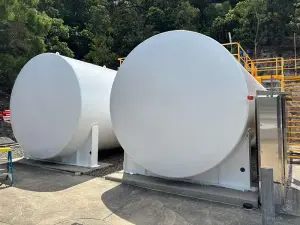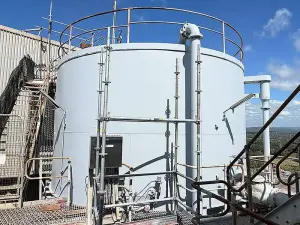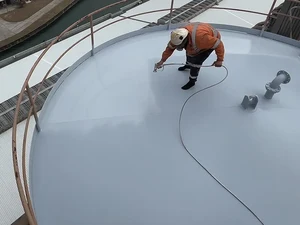
Clean the substrate
Wash the surface thoroughly to remove oils, salts, dirt and other contaminants. In heavily contaminated areas, a hot detergent wash may be required.
Prepare the surface
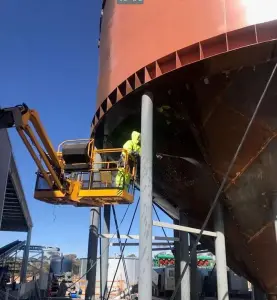
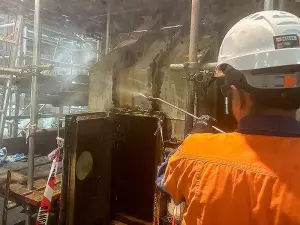
Remove loose rust, scale and poorly bonded coatings. NanoPrep performs best when applied over firmly adhered or “tight” rust. Prepare the surface using water blasting (pressure washing) at approximately 3500 psi or mechanical wire brushing.
See these steps on a real job: Fuel Tank Corrosion Protection
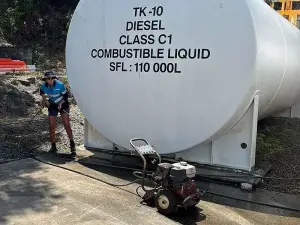
Check the surface condition
NanoPrep may be applied to a damp substrate, but the surface must not be visibly wet. Excess water can dilute the product and reduce its effectiveness.
Mix the NanoPrep
Thoroughly mix the product using a high-torque drill at low speed. Avoid high-speed mixing, as this may introduce air bubbles. If bubbles are present, pass the product through a fine paint filter before application.
Apply the first coat
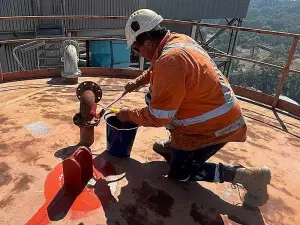
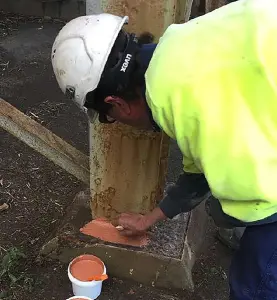
Apply the first coat directly to the prepared substrate using a brush, roller or suitable spray equipment. The product will penetrate the tight rust and react with the iron oxide to form a stabilised iron phosphate layer. The first coat may appear mottled or uneven in colour.
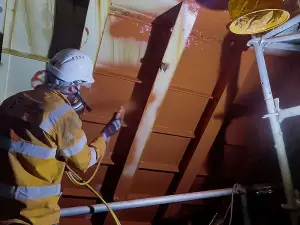
Allow the first coat to cure
Leave the first coat to cure for approximately 2–3 hours at an ambient temperature of 20°C. Cure times may vary depending on temperature, humidity and site conditions.
Apply the second coat
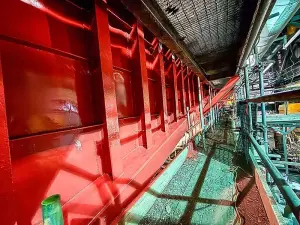
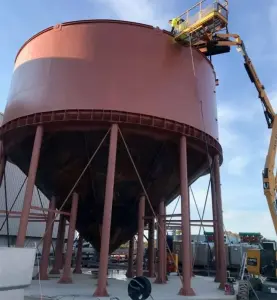
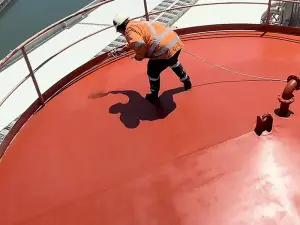
Apply the second coat directly over the stabilised first coat. Ensure complete coverage and aim for a consistent, uniform finish.
Assess whether a third coat is required
Inspect the surface after the second coat. Apply a third coat only where heavy rust was originally present or where a uniform finish has not been achieved.
Allow the final coat to cure
Allow the final NanoPrep coat to cure for approximately 2–3 hours at 20°C before applying the selected compatible topcoat.
Refer to the NanoPrep IFU
Apply the topcoat
Apply the approved water-based or low-solvent steel protection coating in accordance with the coating manufacturer’s application instructions. NanoPrep is compatible with many acrylic coatings, water-based steel protection paints, two-pack epoxies, polyurea coatings and coatings containing no more than 16% solvent. Do not use solvent-based or silicone-based paints.