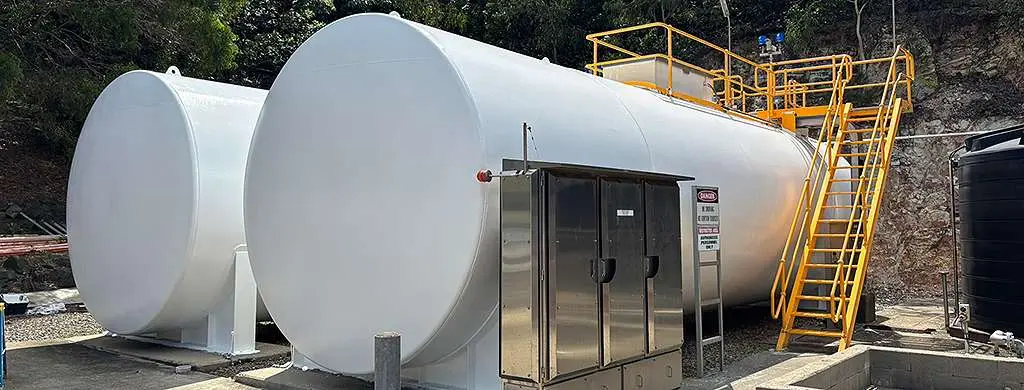
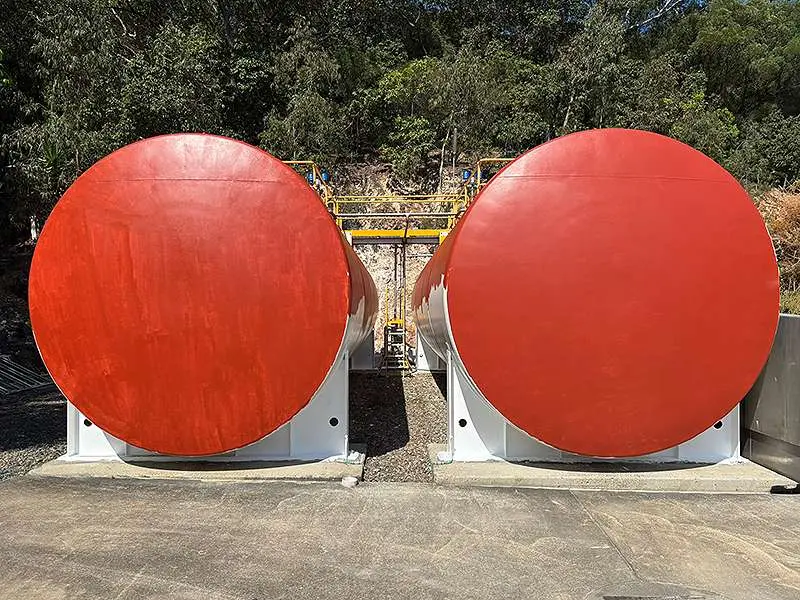
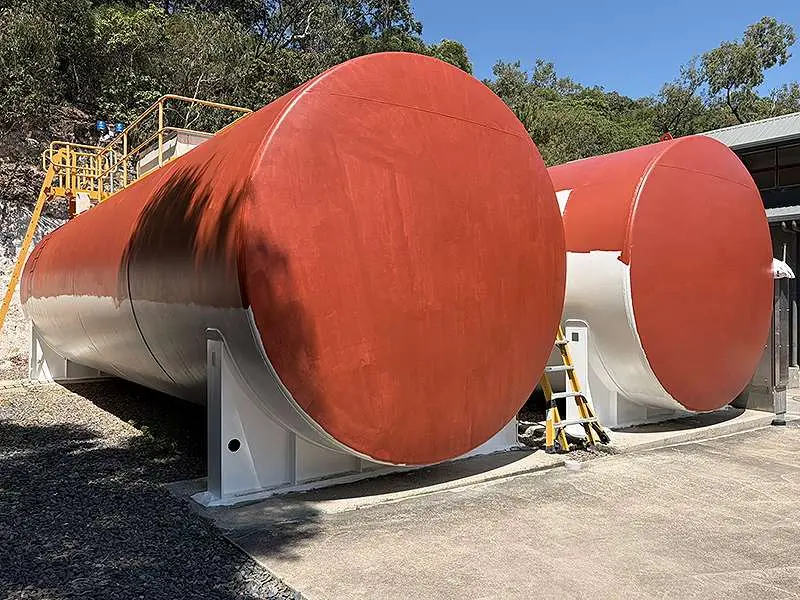
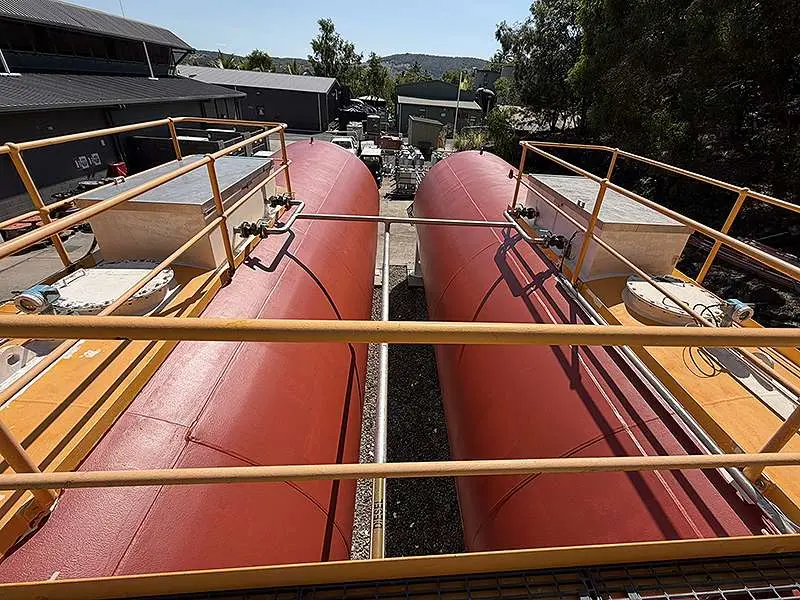
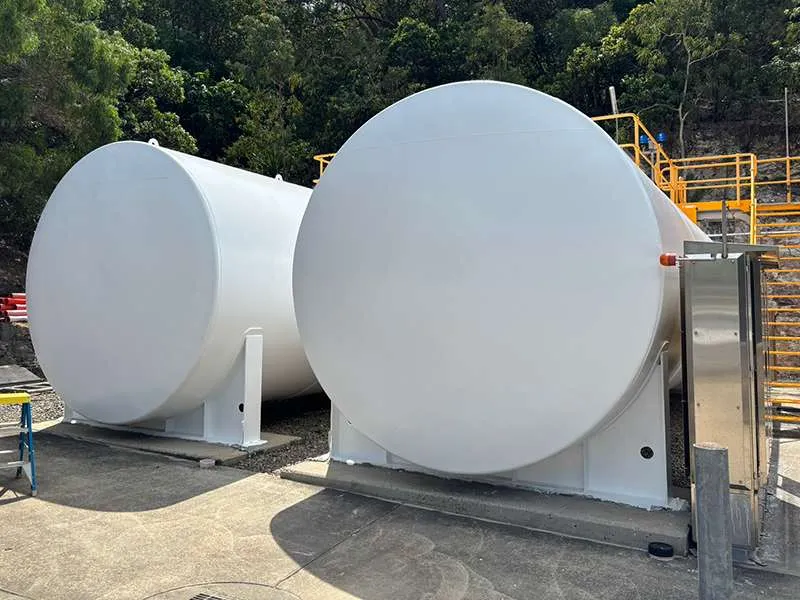
Two 110,000-litre above-ground carbon-steel diesel tanks in Queensland required a high-performance anticorrosive coating system. Year round rain and condensation creates a high risk of under-film and crevice corrosion, especially at saddle supports and tank-to-concrete interfaces. In addition, the coastal environment adds airborne chlorides which accelerates corrosion, while continuous sunlight and elevated surface temperatures demand a UV-stable, heat-tolerant topcoat to prevent premature coating degradation. Given the limited clearance beneath the tank and the presence of adjoining critical infrastructure, abrasive blasting for surface preparation was not feasible; therefore, an alternative method was required.
The Application
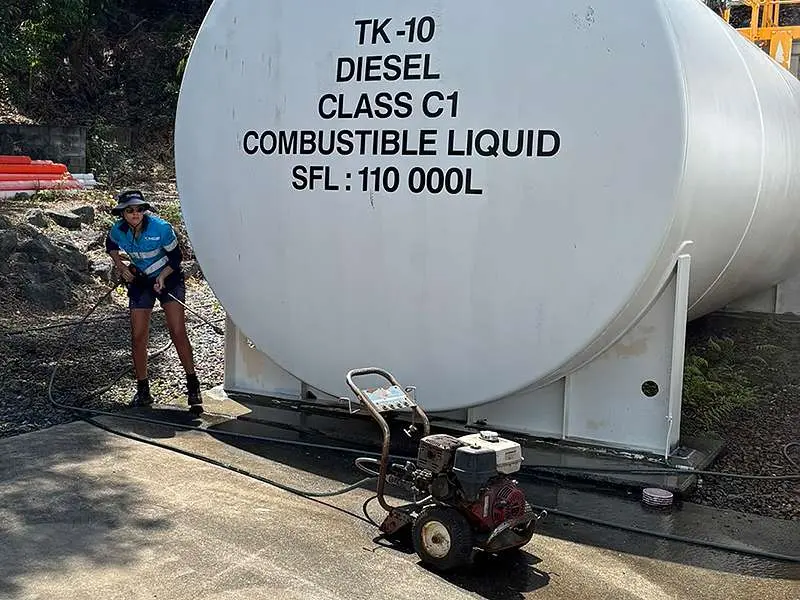
NanoPrep was chosen as the preferred surface-preparation method since it offers an effective, long lasting, low-cost alternative to abrasive blasting using a simple pressure wash at 3,500 psi combined with power-tool cleaning. NanoPrep’s unique technology allows it to penetrate deep into existing painted surfaces for high adhesion and acts as a tie coat for many compatible topcoats.
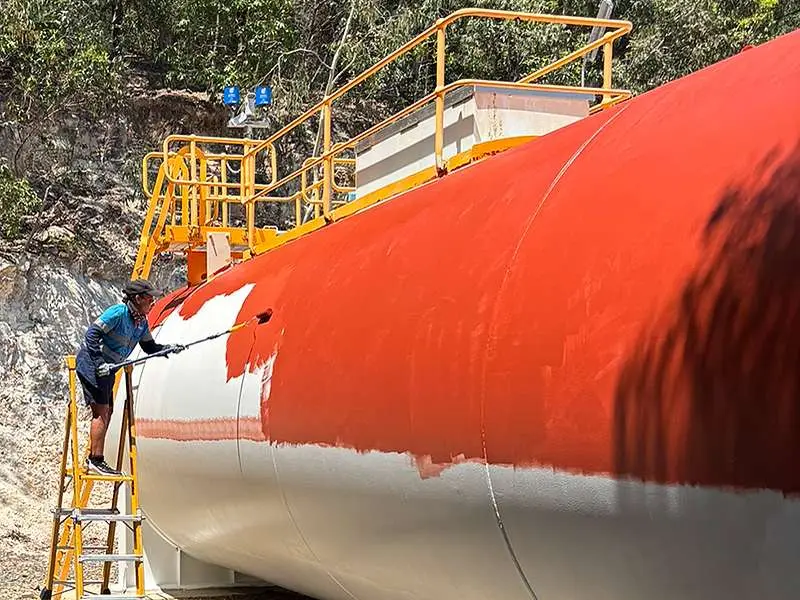
NanoPrep eliminates the need for abrasive blasting, enabling surface preparation via a simple pressure wash. It applies easily by roller, brush, or airless spray and is well suited to tight or difficult-to-access areas.
Upon application of NanoPrep to the substrate, Nanofusion takes place. Nanofusion is a process whereby the product’s nano-sized particles penetrate deep into the rusted substrate, converting iron oxide to iron phosphate to create a stable, high-bond strength base suitable for non-solvent or low-solvent top coats.
The outcome is extended service life, protected fuel quality, and simpler future maintenance.
The Outcome
NanoPrep enabled effective surface preparation using pressure washing and power-tool cleaning, avoiding the excessive cost and downtime of abrasive blasting.
The coating system delivered strong adhesion and robust corrosion resistance at saddle supports and tank-to-concrete interfaces, and a compatible UV-stable, heat-tolerant topcoat suited to Queensland conditions was successfully applied.
Can a fuel tank be coated without abrasive blasting?
Yes. On this project, two 110,000-litre above-ground diesel tanks in Queensland was prepared with a 3,500 psi pressure wash and power tool cleaning, with no abrasive blasting. NanoPrep was then applied directly over the tight rust, followed by a UV-stable, heat-tolerant topcoat.
Why avoid abrasive blasting on a fuel tank?
Abrasive blasting needs containment, grit clean-up and specialist equipment, which adds cost and downtime. On this site, the tank was also next to critical infrastructure. NanoPrep only needed a pressure wash, so the tank could be protected without the disruption of blasting.
How do you coat underneath a tank with limited clearance?
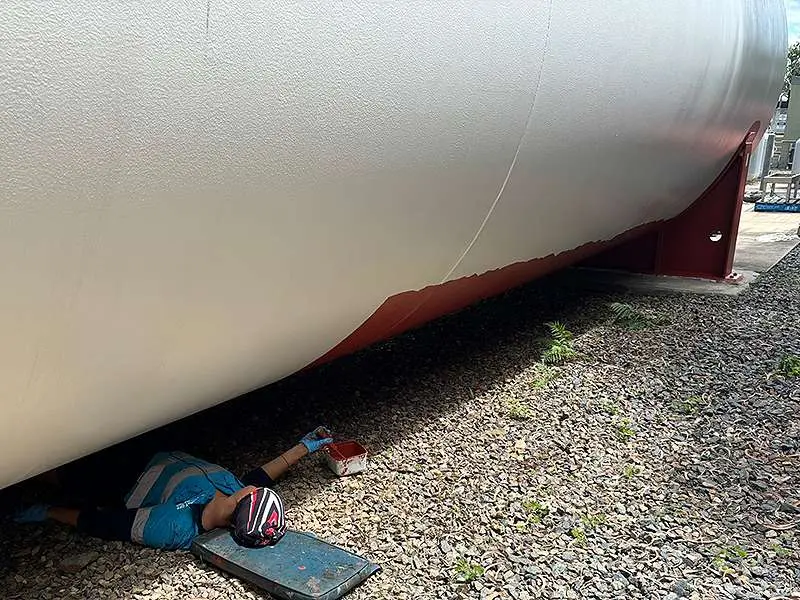
NanoPrep can be applied by brush, roller or airless spray, so it suits tight areas where blasting equipment is hard to use. On this tank, NanoPrep was applied to the underside and around the saddle supports, where clearance was limited.
Does NanoPrep work in coastal and humid conditions?
Yes. This tank was exposed to year-round rain, condensation, coastal salt in the air, strong sunlight and high surface temperatures. NanoPrep can be applied to a damp surface, as long as it is not wet, and it was finished with a UV-stable, heat-tolerant topcoat suited to Queensland conditions.
How are saddle supports and tank-to-concrete joints protected from corrosion?
These are the areas where corrosion usually starts on an above-ground tank, because moisture collects there. On this project, NanoPrep gave strong adhesion and corrosion resistance at the saddle supports and tank-to-concrete interfaces, protecting the areas most at risk.